Why Are More Retailers Choosing One-Piece Injection-Molded EVA Slippers?
From Changing Consumer Demands to Retail Operating Efficiency: Decoding New Trends in the Summer Footwear Market
Because one-piece injection-molded EVA slippers simultaneously fulfill the demands for comfort, durability, slip resistance, and omni-scenario versatility, perfectly aligning with current consumer preferences and retailer sourcing trends.
- ✔Omni-Channel Adaptability: EVA slippers are adaptable across a wider array of retail sales channels.
- ✔Margin Protection: Lower after-sales defect rates directly contribute to increased profit margins.
- ✔Volume Growth: Omni-scenario versatility significantly drives overall product sales volume.
Executive Insight
In recent years, the North American summer footwear market has been undergoing a profound transformation. Consumer demand for slippers has gradually shifted from "cheap pricing to satisfy basic wear" toward "comfort, durability, and omni-scenario versatility."
Simultaneously, retailers are seeking to optimize overall operational efficiency by consolidating SKU counts, reducing after-sales defect rates, and accelerating inventory turnover velocity.
Against this market backdrop, one-piece injection-molded EVA slides—powered by their superior comfort, structural durability, waterproof/slip-resistant performance, and multi-scenario adaptability—have rapidly become a core strategic category for an increasing number of retail buyers.
This chapter examines prevailing North American sourcing trends, analyzes the top priorities of procurement managers, and explains why one-piece injection-molded EVA slides are becoming an indispensable choice in summer footwear portfolios.
I. One-Piece Injection-Molded EVA Slippers Are Progressively Replacing Traditional Flip-Flops
According to recent Point-of-Sale (POS) retail data across North America, traditional thin-soled glued flip-flops are rapidly losing shelf space due to high frequencies of sole detachment and limited usage scenarios. Taking their place is a category achieving ultra-fast sell-through velocity: One-piece Injection-Molded EVA Slides.
The reason they have become the strategic "Hero SKU" specifically requested for replenishment by U.S. retailers stems from their direct resolution of critical terminal market pain points:
● Orthopedic-Grade Support & Biomechanical Cushioning: Abandoning the cheap, flat feel of traditional thin-soled sandals, high-resilience EVA foam matrices inherently provide exceptional impact absorption (the "cloud-like comfort" consumers actively seek). It specifically alleviates plantar fascia tension caused by prolonged walking. Whether a consumer is walking downstairs to grab a package, walking the dog, or taking a short drive, these slides deliver all-day anatomical support and comfort.
● Omni-Scenario Coverage & SKU Consolidation Strategy: Closed-cell foaming technology imbues the footwear with hardcore 360° waterproof and quick-drying properties, allowing products to seamlessly transition from saltwater submersion to urban indoor lounging. For retailers, this means using a single high-shelf-productivity SKU to replace 5 to 6 fragmented sub-categories, drastically reducing store inventory depth and capital tie-up.
● Physical Slip Resistance & Mandatory Safety Standards: To combat standing water and slick surfaces, top-tier manufacturing partners utilize specialized outsole tread patterns and modified polymer formulations. This ensures dynamic friction coefficients perfectly align with the U.S. ASTM F3445-21 wet slip resistance standard, completely eliminating the risk of catastrophic retail lawsuits triggered by slip-and-fall accidents.
II. Why Are Consumer Purchasing Habits Shifting?
Historically, summer slippers were treated primarily as seasonal commodities, with consumers focusing heavily on cheap pricing.
In recent years, however, consumer purchasing habits have shifted dramatically. An increasing number of people want a single pair of slippers that is not only suitable for indoor home use but also capable of handling outdoor errands, vacations, gym sessions, beach trips, and short urban commutes.
This evolution in consumer demand has directly catalyzed a structural upgrade in the retail product mix. Rather than making disposable, single-use purchases, consumers are far more willing to invest in comfortable, durable footwear built for long-term daily wear.
For retailers, this confirms that product value is no longer defined solely by price, but by superior consumer experience and repeat purchasing potential.
2026 EU/U.S. Summer Footwear Core Category Evolution & Data Benchmarking Matrix
| Category Positioning | 2025-2026 Market Status & Share Base | CAGR Forecast | Core Commercial Drivers & Terminal Pain Point Evolution Analysis |
|---|---|---|---|
| Traditional Glued Flip-Flops | Holds the largest historical sandal volume (approx. 34.2% - 50.5% share), market value exceeding $23B. | ~3.8% (Growth decelerating, gradually shrinking) |
Pain Points: High rates of structural sole breakage and strap detachment; causes foot fatigue during prolonged wear. Drivers: Heavily reliant on tropical climates and sporadic, cheap impulse buys in coastal tourism scenarios; lacks premium brand markup potential. |
| One-Piece Injection-Molded EVA Slides | Dominating omni-channel retail shelves, becoming the core high-frequency replenishment Hero SKU for retailers. EVA dominates the outsole material market. | ~5.58% (Robust expansion, leading trend) |
Advantages: Unified structure eliminates customer complaint risks; exceptional biomechanical cushioning; transcends indoor/outdoor boundaries; drastically reduces retailer inventory depreciation and seasonal clearance pressure. |
| Lightweight garden shoes | Reached an $8.4B market size in 2023, with North America generating over 37% of total revenue. | ~11.4% (Explosive surge, outperforming category) |
Drivers: A unique convergence of occupational workplace protection requirements and Gen-Z bold streetwear aesthetics; relies heavily on DTC community marketing and highly personalized shoe charm attachments to drive units per transaction (UPT). |
Category Market Share Trends: EVA Slides vs. Traditional Flip-Flops vs. Garden Shoes
Based on recent retail Point-of-Sale (POS) footwear analysis, market share within the North American summer footwear sector is experiencing a violent structural reorganization:
📉 Traditional Glued Flip-Flops: Sharp Contraction
Trend: Market share has plummeted from approximately 45% in 2019 to around 20% currently.
Reasons: Extremely restricted usage scenarios (limited strictly to beaches/pools); toe-post friction causes blisters; glued joints frequently break. High customer complaint rates have prompted retailers to aggressively slash shelf allocations.
⚖️ Vented Clogs / Garden Shoes: Stable with Highly Sticky Subcultures
Trend: Maintaining a stable, elevated market share of around 35%.
Reasons: Driven by the social currency of DIY shoe charms and mandatory occupational demands in healthcare and hospitality, clogs retain a massive, fiercely loyal fan base. However, they are slightly inferior to slide sandals regarding sheer lightweight feel and open-air breathability.
🚀 One-Piece Foamed EVA Slides: Explosive Growth
Trend: Market share has skyrocketed from under 15% five years ago to over 45% today, establishing absolute dominance.
Reasons: Perfectly marrying the lightweight breathability of flip-flops with the cushioned platform support of clogs, EVA slides have become the ultimate crossover item bridging "active sports recovery, streetwear fashion, and indoor lifestyle."
III. Why Are One-Piece Injection-Molded EVA Slippers Gaining Massive Market Popularity?
From a retail operations perspective, one-piece injection-molded EVA slippers not only satisfy evolving consumer demands but also empower retailers to optimize product management. This is demonstrated across the following core dimensions:
1. Superior Comfort Experiences Directly Drive Consumer Satisfaction
Comfort has become a paramount deciding factor for consumers purchasing footwear. High-grade EVA polymers feature ultra-lightweight density, superior shock absorption, and soft biomechanical rebound, effectively mitigating plantar foot pressure caused by prolonged walking.
For the consumer, a more comfortable product equals a superior wearing experience. For the retailer, this translates directly to higher customer satisfaction rates, positive product reviews, and an increased probability of repeat purchases.
Today, superior ergonomic comfort is recognized as one of the primary growth engines driving retail footwear sales.
2. One-Piece Unified Construction Drastically Reduces After-Sales Risk
Traditional multi-component slippers rely heavily on chemical adhesives and complex assembly processes. As wear time increases, these glued joints are highly susceptible to splitting, strap detachment, and structural failure.
In contrast, one-piece injection-molded EVA slippers utilize an integrated injection process that eliminates vulnerable connection points, significantly enhancing structural integrity. For procurement managers, a more stable, durable product guarantees:
● Fewer product returns
● Fewer customer complaints
● Lower after-sales servicing costs
● Enhanced brand reputation and credibility
For long-term retail profitability, these operational values far outweigh minor initial differences in unit purchasing costs.
3. A Single SKU Covering a Broader Array of Usage Scenarios
Consumers are increasingly inclined to buy versatile products capable of fulfilling multiple lifestyle requirements. For example:
One-piece injection-molded EVA slippers effortlessly cover this entire spectrum of usage scenarios. For retail operators, this operational versatility delivers critical advantages:
● Reduced total SKU count
● Increased shelf productivity per individual item
● Alleviated inventory holding pressure
● Streamlined replenishment efficiency
Consequently, more retailers are optimizing their summer footwear assortments through a "Low-SKU, High-Volume" retail model.
4. Extreme Logistics Space Optimization
High-specification EVA materials possess exceptionally lightweight volume densities (ranging from 0.15 to 0.35 g/cm³). Within a standard 40HQ container, loading capacity for EVA slippers is 30% to 40% higher than traditional PVC or rubber footwear, drastically slashing international cross-border freight costs per unit.
5. Perfectly Aligned with Modern Consumer Demands for Effortless Maintenance
Beyond ergonomic comfort, modern consumers prioritize products that are easy to clean and maintain daily. EVA materials feature outstanding water resistance and zero moisture absorption, making daily cleaning effortless while performing flawlessly in wet environments like pools and beaches.
For retailers, offering low-maintenance products that generate high customer satisfaction directly enhances the overall shopping experience and strengthens brand equity.
6. Unmatched Flexibility in Serving Diverse Retail Price Tiers
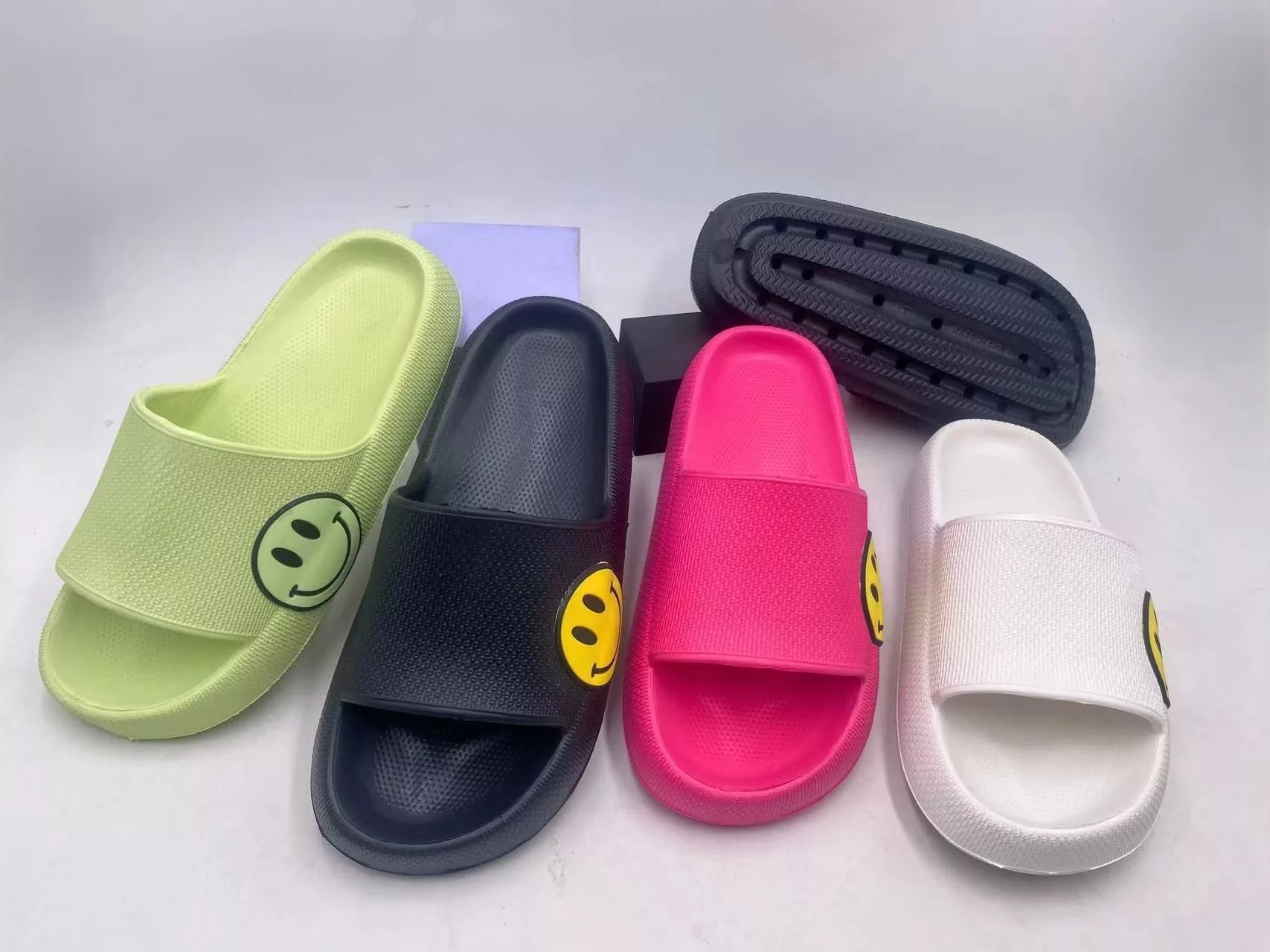
The EVA polymer substrate is exceptionally suited for 3D surface texturing, dual-color precision injection, and co-branded IP customization, empowering retailers to effortlessly build high-margin Private Label lines. By adjusting material density, platform sole thickness, color palettes, surface engraving, and packaging presentations, brands can engineer comprehensive product matrices spanning multiple market tiers. For example:
| Market Positioning | Product Characteristics | Target Retail Channels |
|---|---|---|
| Economy Tier | Basic silhouettes, classic colorways | Chain hypermarkets, convenience stores |
| Mid-Range Market | Ergonomic footbeds, multi-color selections | Department stores, e-commerce platforms |
| Premium Market | Platform thickness, co-branded customization | Boutique stores, luxury hotels, resorts |
| Private Label Customization | Custom logos, tailored packaging, exclusive mold engineering | Private label brands, corporate brand clients |
This manufacturing flexibility confirms that EVA slippers are viable as a long-term, year-round core product line rather than a fleeting seasonal commodity.
IV. Why Are Retailers Increasingly Consolidating Their SKU Counts?
In the past, retailers traditionally sourced multiple distinct slipper categories to target separate usage scenarios. For example:
•Beach sandals
•Bathroom slippers
•Hotel guest slippers
As inventory holding and warehousing costs continue to escalate, procurement teams are aggressively seeking to cover more consumer scenarios using fewer total SKUs.
One-piece injection-molded EVA slippers perfectly align with this consolidation trend. A single product effortlessly satisfies diverse scenario demands, which not only reduces inventory holding costs but also maximizes shelf display efficiency and replenishment velocity.
For retail chains, this strategic SKU consolidation directly drives higher store-level operating efficiency.
V. What Product Features Do Different North American Retail Channels Prioritize?
The North American retail ecosystem is highly fragmented, with each distinct channel prioritizing entirely different "procurement value drivers":
| North American Retail Channel | Terminal Core Pain Points & Demands | Sourcing Priorities for EVA Slippers |
|---|---|---|
| Large Chain Hypermarkets (Walmart, Target) |
Demands strict quality control, regulatory safety, and mass-market affordability; zero tolerance for compliance-related recall risks. | Compliance & Stability: Mandates CA Prop 65 lab test reports; prioritizes basic silhouettes, family bundles, and durable, cost-effective models. |
| Outdoor & Sporting Goods Stores (REI, Dick's) |
Consumers prioritize post-workout plantar recovery functionality and rugged outdoor traction. | Biomechanics & Traction: Demands hardcore anatomical arch support and deep-tread outsoles certified under the ASTM F3445-21 slip-resistance standard. |
| Independent Coastal & Boutique Stores (Coastal Boutiques) |
Basic models face brutal price wars; urgently require high-margin, visually trend-forward models with social media virality. | Aesthetics & Agile Customization: Prioritizes thick platform soles, avant-garde silhouettes, trending Pantone palettes, and flexible low MOQ requirements. |
| Luxury Resorts & SPAs (Resorts & Spas) |
Requires products matching premium hospitality standards while adhering to stringent hygiene and environmental criteria. | ESG & Co-Creation: Demands recyclable/bio-based materials, premium tactile textures, and custom-tooled molds featuring embossed hotel branding. |
When vetting and selecting summer footwear lines, procurement teams should evaluate the following strategic dimensions:
● Whether the product can cover multiple consumer usage scenarios to facilitate SKU consolidation.
● Whether it delivers the comfort, lightweight density, water resistance, and slip resistance actively demanded by modern consumers.
● Whether it utilizes stable one-piece injection molding construction to minimize after-sales defect risks.
● Whether the category demonstrates year-round sales potential rather than brief seasonal demand.
● Whether the supplier supports multi-tier market positioning and private label customization requirements.
Ultimate product competitiveness stems not merely from unit purchasing cost, but from superior consumer experiences and retail operating efficiency.
Chapter Summary (Key Takeaways)
The North American summer footwear market is rapidly transitioning from functional consumption to experiential consumption.
Consumers demand comfortable, durable products adaptable across diverse daily scenarios, while retailers are intensely focused on inventory turnover velocity, after-sales servicing overheads, and SKU management efficiency.
One-piece injection-molded EVA slippers successfully balance consumer satisfaction with retail operational efficiency, making them a strategic priority for modern procurement teams.
For retailers seeking to elevate sales efficiency and optimize product portfolios, this category delivers substantial long-term commercial value.
Industry Insight
In recent years, global footwear brands developing summer collections have placed increasing emphasis on comfort, lightweight density, omni-scenario versatility, and minimalist design. The fundamental rationale behind consumer slipper purchases has shifted from "cheap and functional" to "superior wearing experience and higher usage frequency."
For retail procurement managers, this mandates an immediate alignment in product development strategy. Rather than endlessly inflating SKU counts, teams must focus on curating concise, highly refined, long-term core portfolios capable of dominating diverse consumer scenarios.
Frequently Asked Questions (FAQ)
As consumers prioritize comfort, lightweight density, and daily wearability, EVA slippers seamlessly accommodate home, travel, pool, hotel, and leisure usage scenarios. Furthermore, one-piece injection molding guarantees superior durability and minimal after-sales risk, driving widespread retail adoption.
Beyond baseline purchasing price, procurement managers must strictly evaluate batch quality consistency, regulatory compliance, delivery reliability, after-sales defect rates, and inventory turnover velocity.
One-piece construction eliminates bonded seams and assembled components, significantly enhancing structural stability and eradicating after-sales risks caused by adhesive splitting or strap detachment. For retailers, this ensures lower return rates and dependable consumer experiences.
The powerful convergence of ergonomic comfort, structural durability, omni-scenario versatility, and near-zero after-sales defect rates aligns perfectly with modern consumer preferences and retail profitability targets.
Chain hypermarkets, convenience networks, luxury hotels, resorts, fashion boutiques, and cross-border e-commerce platforms all demonstrate exceptional sales velocity, provided the product specifications are tailored to each channel's specific positioning.
Chapter 4 | Why Is High Inventory Turnover Velocity More Critical Than Low Purchasing Price?
From Inventory Management to Cash Flow: Decoding the True Profitability Logic of Summer Footwear
Inventory turnover velocity has become the ultimate benchmark for measuring retail operating efficiency.
Purchasing Price Determines Cost, But Inventory Turnover Dictates Profit.
Rather than chasing the lowest initial FOB price, modern procurement teams are focusing on whether a product can achieve rapid sell-through, facilitate high-frequency replenishment, and maintain rock-solid profit margins.