How to Source Cotton Slippers from China: A Practical Guide for European and North American Buyers (Part 1)
A practical sourcing guide covering product specifications, supplier evaluation, MOQ, cost control, quality assurance and production management.
Sourcing cotton slippers from China is not simply about finding the lowest factory price. For retailers, wholesalers, e-commerce sellers, hotel suppliers, private-label brands, and footwear importers in Europe and North America, a successful sourcing program depends on much more than the unit cost. Product specifications, materials, MOQ, sampling, quality control, compliance, packaging, production capacity, lead time, shipping, and supplier reliability all affect the final cost and commercial performance of an order.
This becomes particularly important when buying cotton slippers for the autumn and winter seasons. A product that arrives late, fails a quality inspection, uses the wrong materials, or does not meet the requirements of the target market can create costs far beyond the original purchase price.
A Reliable China Sourcing Process
This guide explains each step from the perspective of an international B2B buyer and provides a practical framework for sourcing cotton slippers from China with better control over quality, cost, compliance, and delivery.
1. Start with a Clear Product Specification
One of the most common mistakes international buyers make is contacting factories before defining exactly what they want.
A request such as: "We need 5,000 pairs of cotton slippers. Please send us your best price." does not provide enough information for a factory to prepare a meaningful quotation.
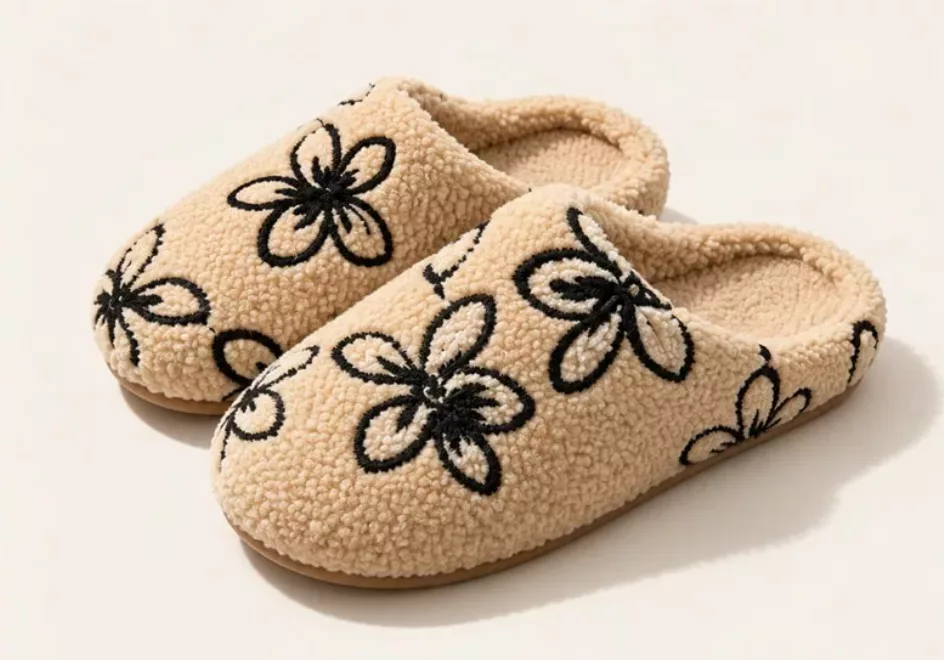
"Cotton slippers" can refer to many different products. Upper materials, lining, sole construction, thickness, sizing, colors, packaging, branding, and intended use can all significantly change the product cost and production requirements.
Before contacting suppliers, prepare a basic Product Specification Sheet or Tech Pack.
The more clearly the specifications are defined, the easier it becomes to compare quotations from different suppliers on a like-for-like basis.
Why this matters
Two suppliers may both quote for "cotton slippers," while actually quoting products with different materials, sole constructions, packaging, and quality standards. A lower quotation may simply reflect a lower specification. The first objective of an RFQ should therefore be quotation comparability—not simply getting the lowest number.
2. Choose the Right Sourcing Model
Not every buyer needs the same level of customization. Before selecting a supplier, determine which sourcing model best matches your business stage, budget, volume, and product strategy.
Ready-to-Ship or Existing Styles
You select an existing product developed by the manufacturer.
This is often a practical starting point for new buyers or e-commerce sellers testing a new slipper category.
Color or Material Customization
The basic shoe construction remains unchanged, while you customize selected elements such as:
This approach offers more differentiation without the development cost of a completely new product.
Private Label
The manufacturer produces an existing or slightly modified product under your brand. Typical customization may include:
Private label is particularly suitable for retailers, online brands, and wholesalers building their own product identity.
OEM / ODM Development
For buyers requiring a completely new product, the supplier may develop:
OEM/ODM projects normally require more development time, higher engineering involvement, and potentially higher MOQ or tooling costs. There is no universally "best" sourcing model. The appropriate model depends on the buyer's product strategy, expected volume, customization requirements, and target price.
3. Understand MOQ Before Negotiating
MOQ means Minimum Order Quantity. However, MOQ is not a fixed industry number. It can depend on:
For example, an existing factory style may have a relatively low MOQ, while a fully customized slipper requiring new materials, packaging, and tooling may require a substantially larger order.
Instead of simply asking: "What is your MOQ?", give the supplier information about your purchasing plan. For example:
"Our initial order is approximately 1,000 pairs. If the product performs well in the market, our repeat orders may reach 5,000–10,000 pairs."
This gives the supplier a better understanding of the potential business relationship and allows both sides to discuss a realistic initial order structure.
A practical approach
For new suppliers, consider separating your purchasing plan into:
This reduces the risk of committing to a large quantity before product quality, market response, and supplier performance have been validated.
4. Compare Total Landed Cost, Not Just Factory Price
A common purchasing mistake is comparing suppliers purely by FOB or EXW price. Suppose:
Supplier B: $3.15/pair
It may appear that Supplier A is cheaper. But the actual cost of importing the product can include:
Product cost + packaging + tooling + testing + inspection + inland transportation + international freight + duties/taxes + customs-related costs + other import expenses = Total Landed Cost
Example
A lower-priced supplier may have:
As a result, the supplier with the lowest factory quotation may not have the lowest overall procurement cost.
"What will this product actually cost us when it arrives at our warehouse?"
This is particularly important for bulky or seasonal products such as cotton slippers, where carton efficiency, shipping timing, and inventory costs can materially affect margins.
5. How to Evaluate a China Cotton Slipper Supplier
Finding suppliers is relatively easy. The difficult part is determining whether a supplier can consistently deliver the product you need.
Potential sourcing channels include:
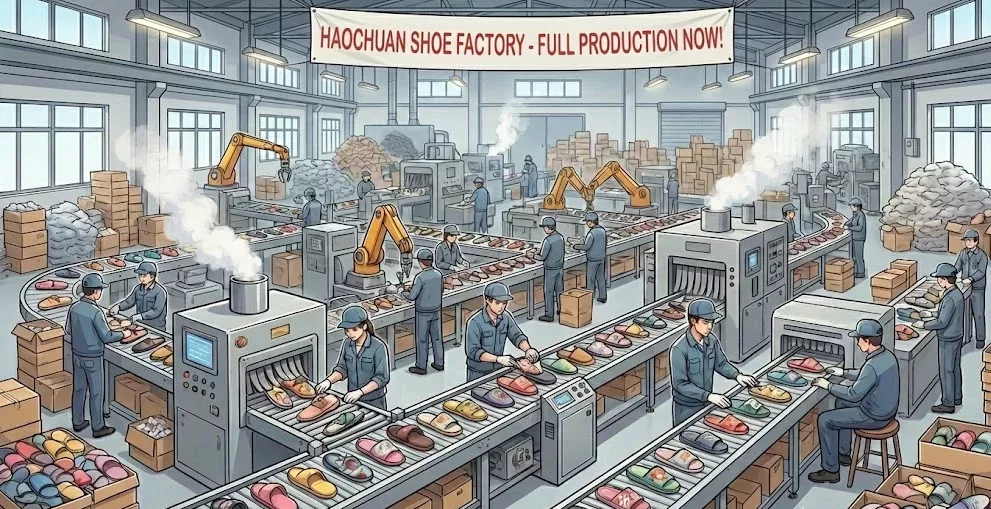
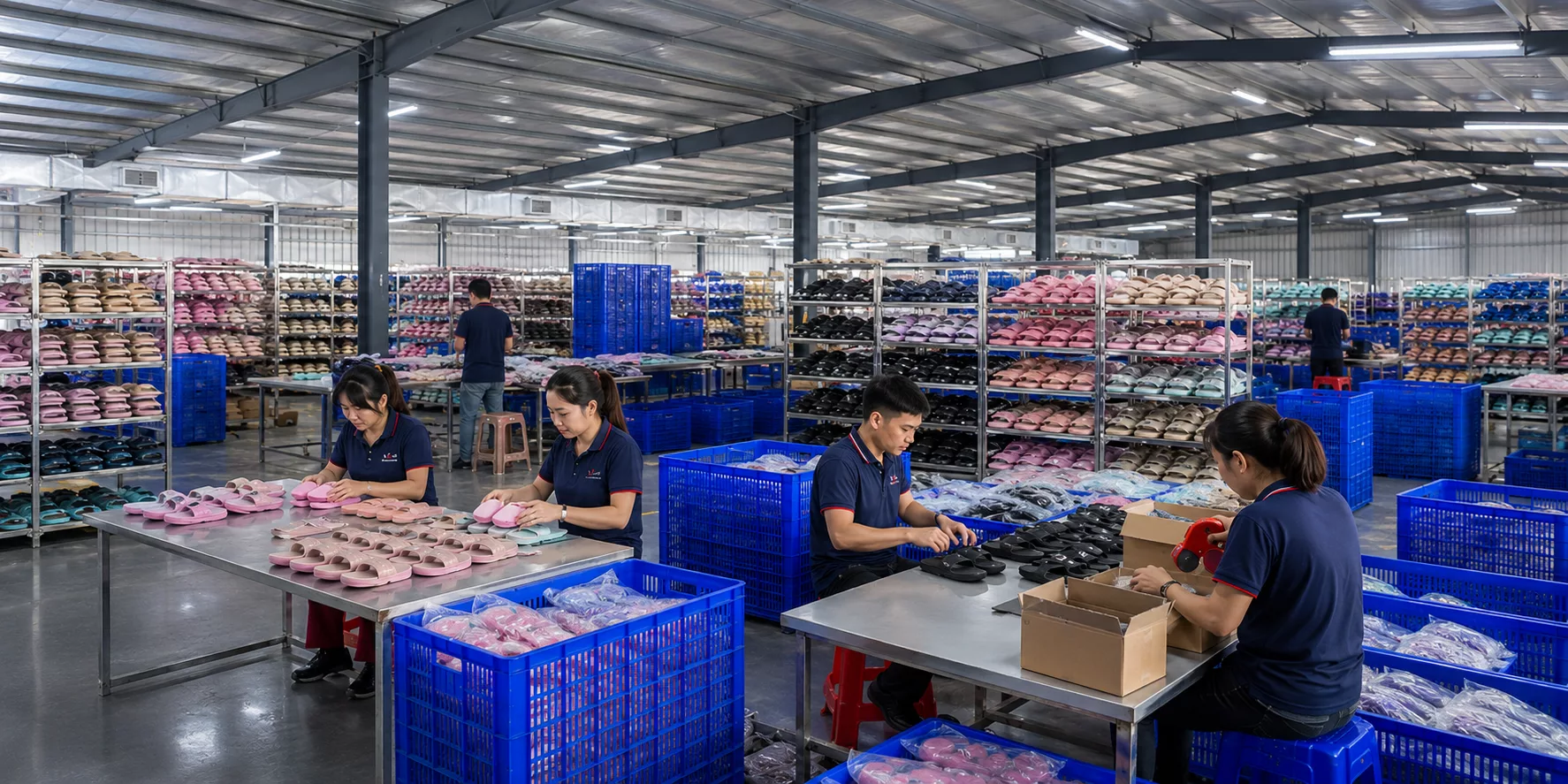
However, buyers should avoid evaluating suppliers solely by whether they describe themselves as a "factory." A strong trading company may have extensive supplier networks and international sourcing capabilities, while a manufacturer may offer stronger control over production and product development.
Supplier verification should cover three areas:
For seasonal products, peak-season capacity may be more important than normal monthly capacity.
6. Factory Audit and Supplier Verification
For higher-value or long-term orders, supplier verification can be performed progressively.
Level 1: Remote Verification
Request a live video tour covering:
The objective is to confirm that the supplier's stated production capabilities correspond with its actual operations.
Level 2: Third-Party Factory Audit
For larger programs, buyers can consider third-party audits from organizations such as SGS, Intertek, TÜV or other qualified inspection providers. The scope may include:
Level 3: On-Site Visit
For strategic suppliers, an on-site visit allows the buyer to evaluate the supplier's production environment and establish direct communication with the management and production teams.
Do not treat certificates as proof of quality
Certifications such as BSCI, Sedex-related assessments or ISO certifications can provide useful information, but they should not be treated as a substitute for supplier verification. Always check:
A certificate can support supplier evaluation, but it does not replace product sampling, factory verification and ongoing quality control.
7. Approve a Production Sample Before Mass Production
The approved sample is one of the most important reference points in the entire sourcing process. Before bulk production starts, the buyer and supplier should agree on a documented production specification and approved sample.
Do not rely only on:The approved sample and written specifications should clearly define what the bulk production must match. Check the following during sample approval:
The final specification should be documented so that the buyer, supplier and inspection team are working from the same reference.
Frequently Asked Questions (FAQ)
Define product requirements → Screen suitable suppliers → Verify supplier capabilities → Compare MOQs and total landed costs → Produce and approve samples → Confirm market compliance → Control production quality → Conduct pre-shipment inspection → Arrange international logistics → Evaluate and optimize supplier relationships
When contacting a supplier, you should specify details such as the product type, target audience, material and functional requirements, standard sizing, colors, packaging, logo, and delivery schedule and location. Once the supplier receives this information, they can effectively carry out custom production tailored to your specific needs.
Common procurement models include purchasing from stock, Lightweight Customization Services, OEM/ODM manufacturing, and Custom Mold Development. Different models cater to different needs: purchasing from stock allows for market feedback testing; light customization creates products with greater distinctiveness; OEM/ODM translates the buyer's concepts into actual products; and custom mold development involves dedicated R&D for a brand's exclusive products.
Next Chapter Preview
How to Source Cotton Slippers from China(Part 2): Quality Control, Compliance & Supplier Selection
Familiarizing yourself with the target market's compliance requirements in advance helps ensure continuous quality control during product customization, while planning procurement schedules ahead of time allows for better management of the purchasing process. A professional supplier evaluation framework and a practical checklist for sourcing cotton slippers in China make it easier to find suitable suppliers.